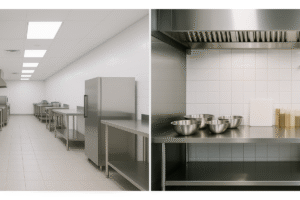
Delivery-first brands are hungry for space. Here’s how owners convert a vacant bay into a clean, code-compliant, kitchen-ready lease.
What is a ghost kitchen?
A professional kitchen built for delivery and catering—no dining room. Operators love the lower occupancy costs. Owners love the steady rent once the infrastructure is right.
Space basics (owner checklist)
- Size: 1,200–3,000 sf works for most multi-station setups.
- Power & gas: verify panel size, available amps, and gas line capacity.
- Water & drains: floor sinks, grease strategy, washable finishes.
- Ventilation: hood + make-up air sized to equipment.
- Delivery flow: pickup zone that doesn’t jam parking.
Health code & permits—no drama version
- Plan review packet: layout, equipment schedule, finish schedule, hood specs, grease plan.
- Inspections: rough-in → hood/MEP → final.
- Documentation: operators handle SOPs (cleaning, temp logs); the lease requires them.
Three leasing models (pick your risk/reward)
- Kitchen-Ready Single Tenant: you deliver infrastructure (hood/grease/power/walls/bathroom). Pros: longer terms, simpler ops. Cons: higher up-front capex.
- Shared/Partitioned Kitchen: multiple users by schedule or stalls; you operate or master-lease. Pros: diversified income. Cons: ops complexity.
- Operator Partnership: you invest partly; operator signs longer term or pays premium rent. Pros: faster lease-up. Cons: bespoke deal terms.
Budget & timeline (illustrative; verify locally)
- Light conversion: good utilities + existing vent path — roughly 8–12 weeks.
- Moderate: new hood/grease, some plumbing — roughly 12–16 weeks.
- Heavy: raw shell to finished kitchen — roughly 16–24+ weeks.
Where money actually goes: hood/duct/make-up air, grease interceptor, power upgrades, washable surfaces, floor drains, inspection sequencing.
Marketing the finished product
- Name it: “The Bay Kitchens – [Neighborhood]”.
- Photography: bright, spotless; show hood line, storage, and loading.
- Prospecting list: delivery-native brands, catering companies, food halls, franchisors, commissary operators.
- Outreach kit: floor plan, equipment list, loading photos, rent/term/TI, simple “pickup flow” diagram.
Week-by-week owner play
- Weeks 1–2: site screen + city pre-meet; confirm vent/grease path.
- Weeks 3–6: design, bids, order long-lead items.
- Weeks 7–18: build + inspections; begin pre-leasing at week 10.
- Weeks 19–20: punch list, deep clean, launch marketing blitz.
Thinking Kitchen?
Request our Kitchen-Ready Checklist and a 20‑minute site screen. If the site fits, we’ll price two leasing models and build your prospect list. Talk to KR Consulting Services.
Mini-Checklist (print this in pdf or png)
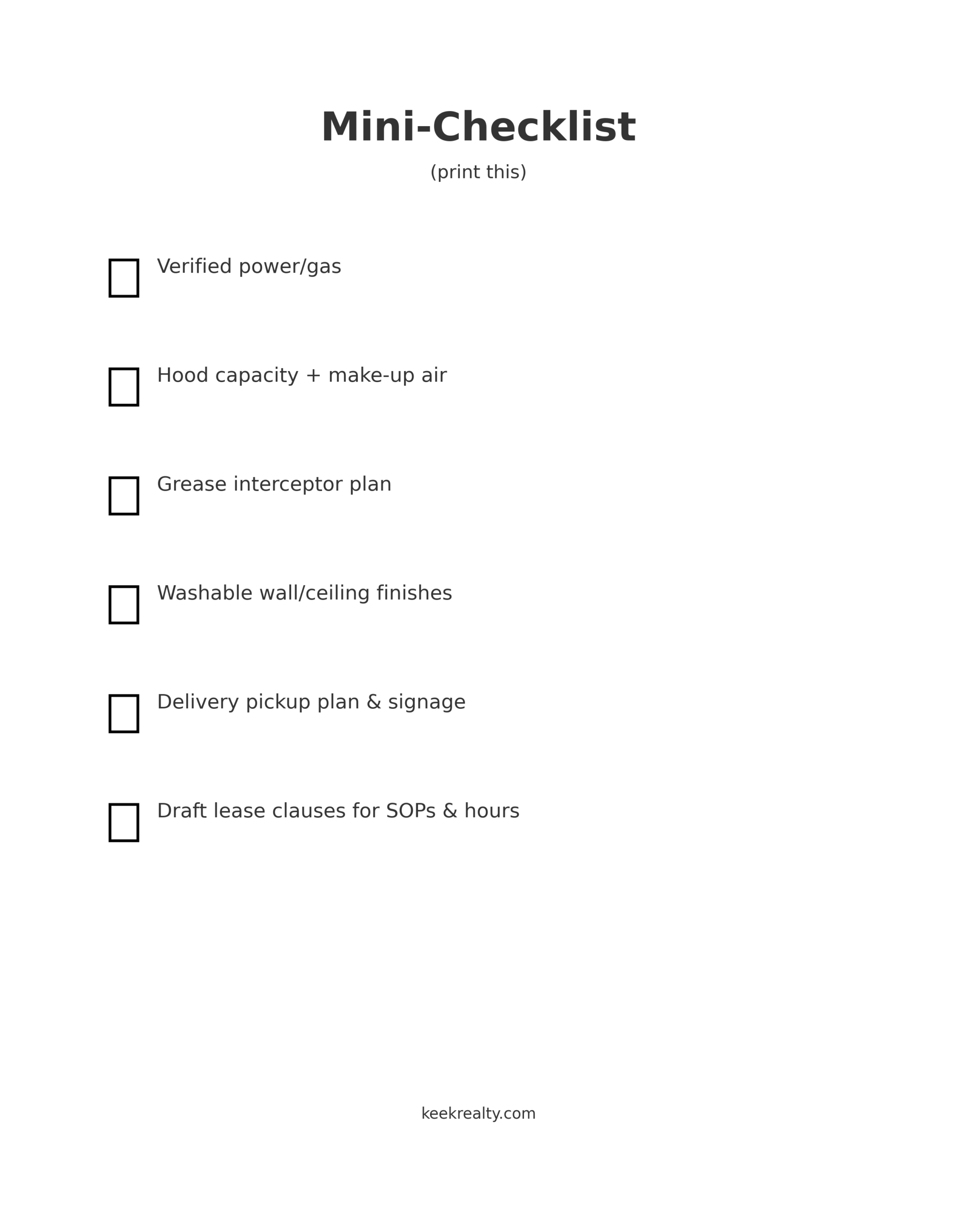
- Verified power/gas
- Hood capacity + make-up air
- Grease interceptor plan
- Washable wall/ceiling finishes
- Delivery pickup plan & signage
- Draft lease clauses for SOPs & hours